
Perimeter drainage around the house - preventing basement flooding on clay soil
Jurassic clay soil traps rainwater against foundations. Learn how a properly installed perimeter drainage system protects your basement from seepage and dampness.
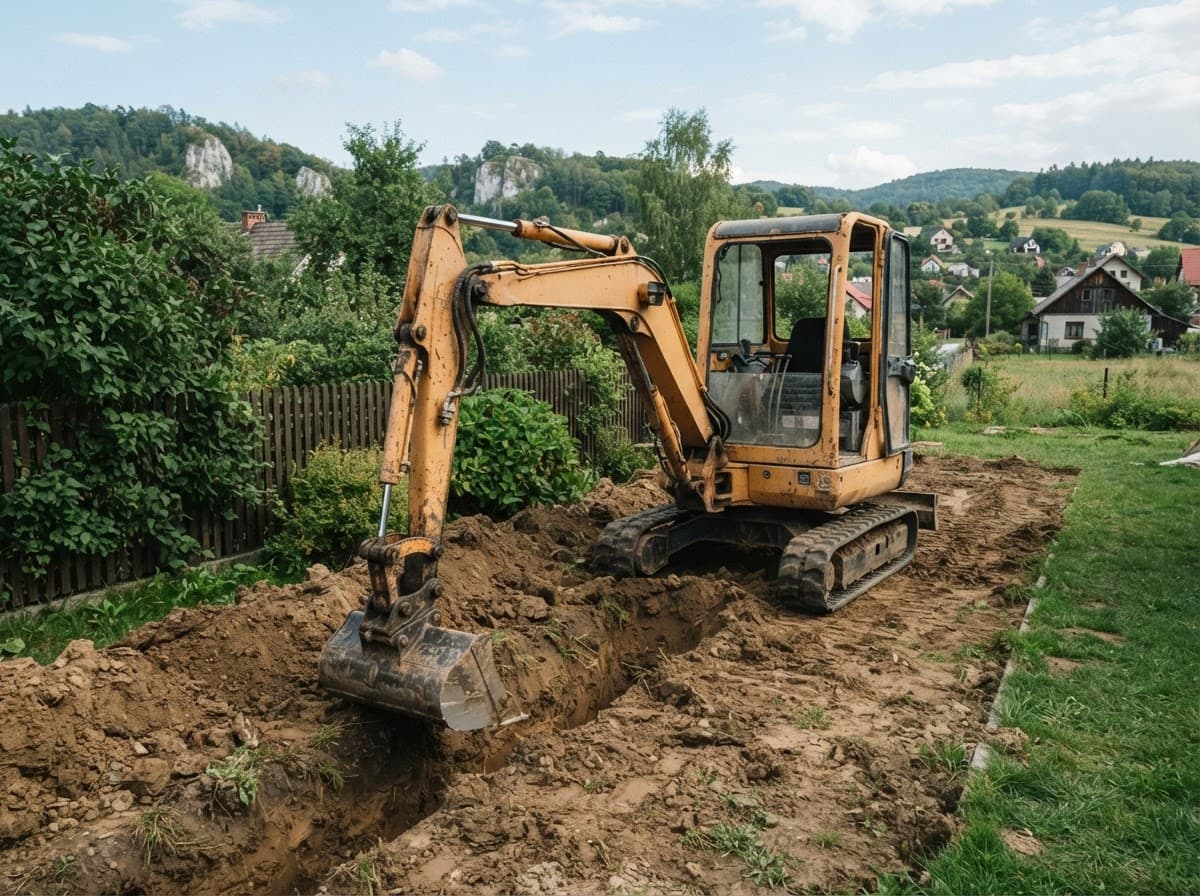
Plots around Krzeszowice and Nawojowa Góra often sit on heavy clay subsoil that drains poorly. Without proper runoff management, water accumulates against foundations, threatening basement flooding and wall dampness.
How perimeter drainage works
A perimeter drain is a network of perforated pipes laid around the building below basement floor level. Pipes are wrapped in gravel and geotextile fabric, which filters water and prevents the aggregate from clogging with fine silt.
Critical installation details
- Pipe slope of at least 0.5% toward the soakaway or storm sewer.
- Geotextile fabric heat-sealed at overlaps to keep sand and clay out of the filter layer.
- Pipe invert set at least 20 cm below the lowest basement floor level.
A properly installed perimeter drain runs maintenance-free for over a decade. It only requires periodic high-pressure flushing through inspection chambers placed at building corners.
Need assistance with your garden?
Get in touch directly by phone or email.
Related articles

Proper Lawn Mowing in Małopolska: Cutting Heights and Clean Edges
Learn the essential rules of mowing in the variable Jurassic climate. Discover why sharp mower blades determine drought resistance.

Automated Garden Irrigation: Why Install Before Turf Laying
Installing underground lines and pop-up sprinklers before laying sod saves hours, reduces water usage, and avoids tearing up finished landscaping.

Hedge Pruning and Shaping: Calendar for Thujas, Yews, and Boxwoods
When and how to prune hedges for a dense, impenetrable green screen. A practical guide to timing cuts in the Małopolska region.